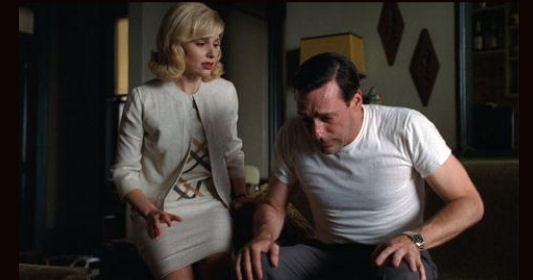
Sunday, October 10, 2010

Rupert Murdoch - A threat to the world's TV viewing audience including you and me

Most are not aware of two burning disputes between one media billionaire and two others. At issue is the price of your monthly cable or satellite TV bill. It could go up 50% in a very few years.

Rupert Murdoch of News Corp, #148 on Forbes World's Billionaires list, has decided to take on Charles Ergen of Dish Network, #117 on the list, and Charles Dolan of Cablevision, #367. Rupert is trying to force the two Charles to charge their subscribers a 50% increase in monthly charges for his TV channels.

The News Corp owned Wall Street Journal article headlined News Corp., Cablevision Square Off explained:
News Corp.—which is seeking higher fees for its channels in negotiations with Cablevision— on Sunday began running ads addressed to the cable-TV company's subscribers, warning that if a new TV-rights deal isn't struck soon, viewers could lose Fox shows including football games and "Glee."

...Carriage contract talks have become more bruising as TV companies push for the first time to land monthly cash fees for broadcast networks. Cable- and satellite-TV operators say they try to withstand fee demands to avoid passing on costs to their customers' bills. As contract deadlines creep closer, each side blames each other for possible losses of favorite shows.

Ultimately, deals often are struck without programming interruptions. But this year, Cablevision customers lost the Food Network and HGTV cable channels for several weeks after a rough-and-tumble fee dispute with Scripps Networks Interactive Inc. In March, Cablevision lost access to ABC and some other Walt Disney Co. channels for nearly 24 hours, including during the first few minutes of ABC's Academy Awards telecast.
Regarding the Dish Network situation, News Corp has pulled all of its cable channels off of Dish including all its regional sports networks. And it is threatening to pull 27 News Corp owned or controlled local Fox TV stations on November 1, stations serving about 50 million TV households representing about 44% of the U.S. market.

In an article headlined Dish CEO defiant after losing Fox channels we learn:
With Fox and Dish also facing the end of their current arrangement for Fox's owned-and-operated TV stations at the end of the month, [BTIG investor analyst Richard Greenfield] argued that waiting to renew both arrangements in several weeks makes no business sense.

"What's the benefit of going dark for four weeks and losing subs, only to ultimately pay Fox what they are demanding," he asked. "We can only presume [Ergen] is prepared to be dark for the long-haul."

A Dish spokeswoman said in a response that programmers "are increasingly bullying pay TV companies into extraordinary rate increases in an effort to pay for expensive sports acquisition rights."

She said the Fox sports channels represent less than 2% of the content that Dish makes available in its most popular programming package. And of the hours that Dish customers spend on watching TV, less than 1% are spent on regional sports networks, she added.
Investment analysts generally are stupid and Greenfield is no exception. The Fox broadcast network's shows aren't doing all that well in the ratings and pulling them off of cable and satellite systems won't improve that. It is true that Dish is already losing subscribers. I know that those upset by the loss of the News Corp sports channels and cable channels don't understand the concerns of the few over the reach of Rupert Murdoch's tightening tentacles on the media, particularly TV.

Over in Britain concern is growing over his latest move. From The Hollywood Reporter:
BBC director general Mark Thompson has again spoken out against Rupert Murdoch-owned News Corp.'s bid for the remaining 61 percent of BSkyB, this time using an interview on PBS' Charlie Rose Thursday to warn against the consequences of the deal.

Thompson's comments on U.S. television come ahead of a hotly anticipated speech later this month by News Corp boss Rupert Murdoch, who is expected to give further details of the bid when he delivers the inaugural Baroness Thatcher lecture in London October 21st.
And from The Guardian/Observer web site:
Murdoch has managed to achieve what most assumed was impossible, a more or less harmonious agreement between, among others, the BBC, the Daily Mail, the Guardian Media Group (which owns the Observer), the Telegraph Media Group and the owners of the Daily Mirror. There probably hasn't been such a disparate and determined alliance since Wellington mustered Prussians, Saxons, Polish, Dutch, Belgian, English and Irish troops to confront Napoleon at a little village south of Brussels in 1815.

This isn't Murdoch's Waterloo and, after 40 years of bending Britain to his political will, the 79-year-old probably is not losing much sleep over the new alliance. Still, even he must be aware of the unprecedented strength of feeling in boardrooms against him. There is almost no one in the business outside News International who disagreed with the director general of the BBC, Mark Thompson, when he said on US television that there was a case for looking at Rupert Murdoch's media ownership systematically because of the "potential for abuse of power".

That is a glorious understatement. Give almost any politician a guarantee of anonymity and he or she will say much more but, as Peter Oborne's Channel 4 Dispatches programme made clear, most are too frightened to challenge him or his executives. Successive generations of politicians have allowed Murdoch to extend his power so, in the estimation of the respected media analyst Claire Enders, Britain has long passed the "Berlusconi moment".

No newspaper company can buy ITV because of rules against cross-ownership, but because Sky was founded after the law was enacted, these rules do not apply. The anachronism means that Murdoch can merge Sky, which has a turnover roughly three times the size of ITV's and is growing at a rate of about 400,000 subscribers a year, with his newspaper group....
This is what Americans also should know. Murdoch's media reach leaves us also with politicians "too frightened to challenge him or his executives." Murdoch manipulates political and economic power in the pursuit of his goals better than anyone else in the capitalist world, East and West, today.

For instance, we had the big uproar in June 2003 over the FCC's move to increase by 10% the number of local TV affiliates a national broadcast network could own - from 35% to 45%.

Even a Republican controlled Congress had trouble with that. But after first voting to keep the ownership cap at 35%, both the House and Senate raised the aggregate cap to 39% by attaching a rider to a massive funding bill. The 39% cap allowed News Corp/FOX to keep all their stations.

Thus I have no delusions that American politicians - liberal, conservative or moderate - have the courage to take him on. But if those two other billionaires, Charles Ergen of Dish Network and Charles Dolan of Cablevision, take him on at the same time, at least some opportunity exists to reign him in. One can hope that if the public loses it's Fox channel in New York City and Philadelphia on both the local cable system and Dish Network, politicians might take notice.

Otherwise, I have to be content with the knowledge that he's 79 and likely will die in the next 20 years. At that point, it is likely his empire will slowly lose its clout as others have done in the past.

Still, in the pursuit of his economic goals, the damage he has done to the arena of American political discourse has already exceeded that of William Randolph Hearst.

(Incidentally, this has nothing to do with partisanship. Hearst was twice elected as a Democrat to the U.S. House of Representatives. Nor does it have anything to do with Murdoch's Australian origins. Hearst's patrilineal ancestor, John Hurst settled in Plymouth Colony around 1620. These guys are/were just missing something found in billionaires like Warren Buffett - a semblance of humility.)


Friday, October 8, 2010

Caprica - the reimagined version

First of all, I'm very uncomfortable watching these SyFy shows on any other day but Sci-Friday. But whatever NBCU wants to do with scheduling and ad sales, they do. Which, of course, leads to the fact that I was also uncomfortable with them running half a season of this show, leaving us with what for all intents and purposes was an action-filled cliff-hanger episode.

So you can imagine my surprise when what was supposed to be a second half of a season looked more like an all new season or all new show introducing new concepts and story arcs, and returning to the really, really slow pace of the first few episodes that put off so many scifi fans.

"Battlestar Galactica" had two incarnations, the original in the late 1970's and the one of the late 2000's termed the "reimagined series." Tuesday's "Caprica" episode felt like a "reimagined" series.

Writing credit for this episode is given to Ryan Mottesheard exclusively and I have no idea what that means as he was script coordinator on "Battlestar Galactica" having a writing credit for one episode which was shared with show creators Moore and Glen Larson.

We have to recognize that from the beginning Moore warned everyone that the show would not be BSG. In 2006(!) Moore said:
It's a very different show; it's not action – adventure and it's not even in space. It takes place on the Planet Caprica and it’s more of a family drama, with political and corporate intrigue.

We also have to recognize that it is a prequel to BSG, except we have to be aware of the "Galactica" explanation that "all of this has happened before, and all of it will happen again" but events are not exactly replicated each time. This "Caprica" period is one of those repeats or the original. We don't know and it doesn't matter. Earth was discovered 150,000 years before now in the "Galactica" finale. Simply, Caprica is a tale of ancient history rather than future history, ancient history that has a civilization that appears somewhat like ours.

I'm beginning to think the "Caprica" creators Remi Aubuchon and Ron Moore have fallen in love with the idea that an audience is out there to be had by careful and slow structuring, offering much detail, with rarely anything that looks like scifi action.

Well, yeah, AMC does have an audience for "Mad Men" and "Rubicon" made up of people like me who love complex stories with complex characters. But whether they'll come over to SyFy on Tuesday in prime time for what is as much a fantasy drama as a scifi drama remains to be seen.

On the other hand, Moore and company are doing what they are doing very well.

In this episode we learn more about the "one true god" religious organization on Gemenon, with its Vatican equivalent surrounded by the invading hoards. But guess what, the Pope equivalent is a woman called "Mother" played by Meg Tilly, an actor who can subtly express with her face and does so in this episode.

It is clear that the parallel here is not necessarily modern Christianity or Islam both of which are more decentralized and fragmented. And yet there are enough historical parallels in both faiths that we must recognize as well as some details that are obviously not a coincidence. For instance, the monotheist terrorist group Soldiers of The One or STO uses the infinity symbol. Of course we can't help but see the potential comparison:
In this episode we also learn more about the Ha'la'tha crime syndicate from Tauron and its leader the Guatrau. Is this a parallel of the Sicilian Mafia? Of course.

Now comes the new parallel story arcs:
  • Billionaire entrepreneur Daniel Graystone has lost his Graystone Corporation to his arch rival Tomas Vergis in the development of the robots we know as the Cylons ("toaster" get's introduced in this episode); he has even lost control of the now nearly demolished one that contained his daughter Zoe's avatar 'mind"; and Vergis also even took away his beloved sports team the Buccaneers; so through Joseph Adama he approaches the Guatrau to pitch the idea that if they can just get rid of Vergis, they could be in a hugely profitable partnership marketing as a cure for grief a computer system that can resurrect dead people as virtual avatars in a holoworld, something that has already happened with Zoe Graystone and Adama's daughter Tamara Adama.
  • "Sister" Clarice Willow, in an effort to wrest full control over the STO movement away from her arch rival Barnabas Greeley, travels to Gemenon and approaches "Mother" for permission to market the aforementioned computer system to resurrect dead people as virtual avatars in a holoheaven, the demonstrable immortality that the religion promises; as a marketing tool, it has the advantage of people being able to see the dead believers in heaven.
All of this involves intrigue and some violence.

Perhaps you're wondering about the last episode of the first half of the season.

Well, the fatally damaged cylon body that Zoe's avatar occupied is boxed up. And we learn that Zoe escaped back to the holoworld by watching her prove her strength as a magical warrior princess "killing" some street punks who call her a "deadwalker", of which we know two exist - her and Tamara.

Further, we learn that Amanda Graystone, who we thought we last saw step off the edge of a bridge an kill herself while Sister Clarice's car was being blown up nearby, actually is now staying in some cabin with Sister Clarice.

So much for the action-packed last episode. Now back to our regularly schedule long dramatic march.

I like this show. At least I like the potential revealed in this episode. I want to know just how the holoworld concept ultimately leads to the Cylons starting a war with the Twelve Colonies several decades from the "now" of these episodes. I like the characters being developed and I like the actors. I like a show that, if it is not going to have a current-day or historical foundation, offers a philosophical underpinning for its broader conflict story arc.

But if the unfolding process of this show is attractive to me and only 27 other people, and that's something I am concerned might happen, NBCU won't keep funding its share.

Tuesday, October 5, 2010

Mad Men: Something good happens, something bad happens

A story arc sequence in this episode says it all about the "business model" of ad agencies like Sterling Cooper Draper Pryce. (I'd also make a sarcastic remark about investment banking here, but that's another blog.)

The partners are gathered in Roger's office prior to leaving for a funeral of a fellow ad man (we really don't know who David Montgomery is). They talk about how to use the event to find new clients. Don's newest secretary Megan enters the room to announce the birth of Pete's daughter. Congrats, all around. Thanks guys.

Pete says "Let's get going." And he and the guys head off to the funeral where we see them whispering to each other about who is going to talk to whom.

“How was the funeral?” Megan asks Don later.

“We’ll see,” he responds.

Death seems to fill the atmosphere at SCDP in this episode after everyone finds out they've lost the biggest client, Lucky Strike. And yet, at the end of the episode we see a nefarious act and blood ketchup in the future. But back to the details of the episode. Let's look at four of the show's key characters.

Don Draper

Well, Big Don didn't "go on the wagon" and neither did "Little Don." While Megan and Faye struggle to keep him from drinking too much, he couldn't keep to his limit of three drinks and couldn't keep "Little Don" in his pants with regard to Megan, who wants a mentor and wants to be successful like Peggy.

And, of course, he manages to manipulate Faye's concern for him to get a future meeting with Heinz to try to replace Lucky Strike.

For these women, Don is the traditional "bad boy." Somehow they see him in jeans and a t-shirt with a cigarette pack rolled up into the sleeve, except he's in a suit.

His pep talk to the employees was adequate, but Jon Hamm really does make Don seem uneasy and worried while struggling to make it convincing.

Losing Glo-Coat was symbolic of how crushing life can be for Don/Dick. But Megan is right in putting his Clio back together. It is a symbol of possible accomplishments.

Peggy Olson

"Every time something good happens, something bad happens. I knew I'd pay for it."

There is nothing like being a fallen-away Catholic. Think about it. Can you imagine any other character in this show summarizing his/her life this way?

For Peggy, having a fulfilling personal life is part of being alive, unlike Don for whom a personal life can never be more than a prop or an occasional escape. So when she wanders late into the gathering listening to Don's pep talk, happy from her new relationship with Abe it's a heck of a come down. (On the other hand, can being told by your lover that you have shoulders like an Olympic athlete really lift your spirits?)

Don, who actually is her mentor, bluntly warns her not to kid herself into believing what he just told the rest of the employees. She's still young and inexperienced. No wonder she thinks some kind of Catholic punishment will follow everything sinfully good that happens to her.

She nails the Playtex presentation, but not without experiencing another team member stabbing her in the back by not telling her about the lipstick on the teeth. Of course, that team member is not a part of any team. Her only teammate is Don.

Sometimes though, I wonder if an overarching morality lesson in "Mad Men" is "Every time something good happens, something bad happens."

Roger Sterling

Roger Sterling is going to be the Brett Favre of  "Mad Men" - the lesson is one should retire at the top of their game and then stay retired.

Roger catches a glimmer of the future, that there might not be a celebration of his life attended by grateful clients and coworkers, a mourning lifetime partner and children, no expression of a man appreciated. From that funeral, we hear about how that man buried himself in his work bringing tokens to his family from his business travels.

In fact, Roger behaves like a child, hiding his guilt over Lucky Strike (it's a good thing caller ID was invented later). Bert Cooper, the firm's resident elderly leader emeritus, crushes him with: "Lee Garner Jr. never took you seriously because you never took yourself seriously."

And Joan finally acknowledges that the "fun loving" Roger is also an irresponsible Roger who has been a constant source of disappointment and now has endangered her livelihood. When she makes it clear that she is ending their relationship, Roger looks like a child who's favorite toy is taken away.

But Roger has Sterling’s Gold and signs his first copy...for his young, new trophy wife who has already replaced his real wife and, unintentionally on Roger's part, Joan. One has to wonder if the writers have actually written the book to be sold at the end of this season.

Pete Campbell

Some might find it odd that Pete didn't stay at the hospital to be present at his daughter's birth. If you do, you were born after the 1960's. In 1965 husbands tried to stay at the hospital in the waiting room, but they weren't expected to hang around for days as they had a life and they never, ever were in the delivery room.

Still, for Pete the meaningful interaction was in that waiting room. His father-in-law wants him to get out of SCDP and take an offer to work for the rest of his life with people he hates. What will Pete do? He seems to forgive Don a lot, but Don pushes him away again accusing him of screwing up the Glo-Coat account.

The future for Pete is a family. But we seem to see a maturing Pete, finding his footing, not wanting to bail on what appears to be a failing firm. We know he will seek a way to take advantage of the situation, but this Pete knows full well that opportunities for real gains won't present themselves in a firm he didn't help start.


As we were serenaded during the ending by Jim Reeves singing "Welcome to My World," we realize that seasons of "Mad Men" don't wind down, they rachet up to leave us wanting more, from the show and from life. For the characters and many who lived during this period:

Knock and the door will open
Seek and you will find
Ask and you'll be given
The key to this world of mine

Welcome to my world...

Wednesday, September 29, 2010

Mad Men: Don't panic, all tragedies have been averted...

Joan Harris is the only one who did not seem to have a panic attack as characters are confronted with threats to their reimagined existence.
"We averted a tragedy. Life goes on."
And so Joan seemingly sums up the appearance of things in an episode that indicates the imminent collapse of the house of cards built on lies that is Sterling Cooper Draper Pryce. With life closing in, Don Draper was feeling appropriate in this scene:


And we watched as life and his father continue to give Lane Pryce a beating and in response he leaves to put his home life in order telling the partners the finances of the company are fine and Joan can deal with anything that he thinks could come up. (Will this man come back?)


What could come up? Yes, Roger knows the company's core account is lost and has 30 days before he has to tell everyone - so he didn't tell them. Yes, Pete's dumping a huge account because Don isn't really Don and the FBI might not like that. What could go wrong in the final three episodes of the season?

Is Don still Dick as he's eying Megan freshening her lipstick in the final scene? Or is he just realizing how these women seem to be his undoing. Particularly as he opens up to Faye creating the possibility of a real relationship, what's going on with the Megan stare?

Many are wondering if Joan had the abortion. Roger isn't, but she never says she did, offering only that phrase: "A tragedy has been averted."

As Roger takes out his nitro pill, one can't help but wonder about his future. Particularly when he tries to network on the phone looking for a replacement account, or two, only to discover his old network is dying, literally.

Why did Pete seem to capitulate so easily? Given the time frame, I'm pretty sure he hasn't dumped that account yet. And while I know the FBI might discover the truth about Don, the 1965 FBI is so focused on the Communist thing instead of simply doing the job, I'm not sure that what will happen. The discrepancy in birth dates should have been discovered before any interviews.

Nonetheless, Don/Dick has reason to panic. He's looking at up to five years imprisonment any lying to the government. Betty probably didn't know the law would apply to her as she supports Don's lie. But then again, the lie has trapped her, also.

“Do You Want to Know a Secret?” the Beatles song at the end asks, though they used an elevator music version - couldn't afford the license for the original on an AMC budget? This is the episode that left so many questions to be answered.

But apparently Sally and Don have connected via the Beatles. That's nice, though their big 1965 hit was Help.

Thursday, September 23, 2010

Mad Men: Can there be soup without a pot?

Before plunging forward, I need to thank my partner in life for offering much that makes up this and other "Mad Men" posts. Without her reactions to this show and discussion of the stories from her perspective which is based on having experienced the workplace in 1965, I would miss much.

Joyce explains it all to Peggy:
"Men are this vegeteble soup and you can't put em on a plate or eat em on the counter, so women are the pot. They heat em up, they hold em, contain em, who wants to be a pot? Who the hell said we're not soup?"
The as yet undeterred Peggy offers, "I don't think that's true."

In an otherwise excellent cover story on "Mad Men" in the current issue of Rolling Stone,  the writer says:
This season, Weiner has taken a step back from the broader themes, placing less attention on the world around Don Draper....
Well, not exactly. Both growing ferment around Vietnam and, most obviously, The Second Wave of the feminist movement underlie this whole season.

If you didn't get it before, this episode was in your face all about "the changing of the guard" in the feminist movement. (Read my review of episode 2 of this season for a short recap of the feminist movement which actually accomplished much, unlike the Vietnam thing. I also have a footnote at the end of my post on my thoughts expressed in previous posts on the feminist them of this season by episode.)


The sudden death of Ida Blankenship is the symbolic "fireworks, cannons, cymbals crashing, the loud 1812 Overture movement" announcing the handoff to the women of The Second Wave.

A great deal of comedy surrounded Don's problem that she died at her desk while a client was in the office. But if you carefully watched the women of Sterling Cooper Draper Pryce, you knew this event impacted on them at the core.

That the men don't know how to write her obituary is not surprising, but the best description of her achievement was Burt Cooper's: "She was born in 1898 in a barn. She died on the 37th floor of a skyscraper. She was an astronaut." What a truly remarkable piece of TV writing.

The second more subtle, but still in your face, feminist element of this episode was Sally's revolt. This particular scene summarized the other end of the feminist story arc as both these women know that their choices will seriously affect the life of all the little girls out there in 1965.
Unlike many of this season's episodes, much "happened" in this one. But we still have the subtle undercurrent. For instance, Sally makes and serves french toast to her dad. What's that about, you ask? Well I'm glad you asked.

You see, it was Carla who taught Sally. Peggy let her clueless new love interest (clueless is the theme for her love interests) know in no uncertain terms that there is a parallel here. Women are servants of men, blacks are servants of whites. This was the social norm.

This structure enables SCDP and the depicted households to operate smoothly. Secretaries - women - took care of their bosses - men - emotionally. Megan-the-office-wife takes care of Don and Sally. Faye struggles because she fails with Sally, making her feel less of a woman. Joan and Roger are so co-dependent emotionally that they can't escape their relationship which thrives on it's illicit nature.  Yet Joan is also trying to take care of Greg and, though he's not worthy, she feels like she's failing somehow. Even Ida took care of Cooper in their time in her way.

Peggy hints that ignoring the black boycott of their client's stores may be hazardous. The undercurrent is that the men of SCDP ignoring the women of SCDP, as a symbol of the times, may be hazardous.

When Megan tells Sally everything will be alright, Sally says clearly: "No it's not."

And we know it's not.

More bluntly was the warning from Joan to Roger saying she's afraid of the change in the neighborhood their walking through. Roger, you've ignored the change and it's hazardous. This scene has further undercurrents. When you watch Roger and Joan curl into themselves out of fear (and a good tactic), you also sense that additional level of reality facing each that Ida's death pushed forward. Roger told Don he fears dying at the office. Joan fears Greg will die in Vietnam.

Naturally, after the trauma they turn to each other for familiar comfort. Was this a one time thing or a new beginning? Only Weiner knows.

Finally, the whole boycott issue deserves some historical context. S. H. Kress & Co. and the F. W. Woolworth Company did see some early 1960's boycotts. When they spread north, the issue became more corporate. Fillmore Auto Parts is taking a big risk. Don should be listening to Peggy and no one should be suggesting using Dean Martin because he was buddies with Sammy Davis Jr.

The general wakeup call for the corporate community will begin soon. In August 1965 the Watts Riots occurred. From Wikipedia:
Eventually, the California National Guard was called to active duty to assist in controlling the rioting. On Friday night [August 13, 1965], a battalion of the 160th Infantry and the 1st Reconnaissance Squadron of the 18th Armored Cavalry were sent into the riot area (about 2,000 men). Two days later, the remainder of the 40th Armored Division was sent into the riot zone. A day after that, units from northern California arrived (a total of around 15,000 troops). These National Guardsmen put a cordon around a vast region of South Central Los Angeles, and the rioting was largely over by Sunday. Due to the seriousness of the riots, martial law had been declared. Sergeant Ben Dunn said "The streets of Watts resembled an all-out war zone in some far-off foreign country, it bore no resemblance to the United States of America". The initial commander of National Guard troops was Colonel Bud Taylor, then a motorcycle patrolman with the Los Angeles Police Department, who in effect became superior to Chief of Police Parker. National Guard units from Northern California were also called in, including Major General Clarence H. Pease, former commanding general of the National Guard's 40th Infantry Division.
This wasn't just in the North, it was in Hollywood. Of course, it would take the much worse 1967 Detroit Riot for corporate America to realize that the race problem was not a quaint former Confederate States problem, but an American problem in general, a problem that still hasn't been fully resolved.

But if the Don Draper's were a little slow off the mark to see that this was bad for business, Peggy and the bra burners do have to realize that there were no women's lib riots resulting in the death of many, the injury of many more, and huge losses of property.

Still, without these women pushing their agenda, we would not have the very different workplaces we have today and the greater opportunities for women in our society, regardless of race. (Yes, I know there remains a glass ceiling.)

But someone still has to ask Joyce the philosophical question: "Can there be soup without a pot?"


Episode 1: "...The episode story arc about the Janzen swimming suit people offering a thematic reference to the 1960's battle over women openly embracing their sexuality...."
Episode 2: "The second wave of the American feminist movement had reached boiling temperature. Helen Gurley Brown's
Sex and the Single Girl sold 2 million copies in 3 weeks in 1962 warming the cauldron around working women. But Betty Friedan's 1963 book The Feminine Mystique ignited the fire."
Episode 3: "...What "Mad Men" is presenting is Joan as a real pioneer in the dilemma facing a career woman in the age of the pill (in 1964, an age that is barely 4, maybe, in New York City with a very sympathetic gynecologist) - how do you have it all? "
Episode 4: "The one thing we know about Peggy is she knows she has the talent and skills for the job and has already chosen to become "a suit" not a hippie nor a traditional wife and mother."
Episode 6: "So here we are at SCDP-creative this season. The mentor genius Don/Dick is losing it. Peggy is stepping up to keep things in order. These are two people who know each other - not yet equals, but almost family in the sense that you know which uncles have a drinking problem."
Episode 7: This is the one episode where Don and Peggy's relationship both personally and professionally grow in ways contrary to and well beyond the general men-women office relationship.

Sunday, September 19, 2010

Mad Men: The Amazing Rolling Fables?

When I'm drivin' in my car
and a man comes on the radio
he's tellin' me more and more
about some useless information
supposed to fire my imagination.

When I'm watchin' my TV
and a man comes on to tell me
how white my shirts can be.
Well he can't be a man 'cause he doesn't smoke
the same cigarettes as me.
The above is the first two versus of the opening song in this weeks episode, "Mad Men: The Summer Man." Most recognize the chorus, few know the verses from (I Can't Get No) Satisfaction, the June 1965 hit release from The Rolling Stones. That it's about advertising and about dissatisfaction certainly is appropriate to the show.

But it isn't the only material lifted from another source in this episode. We saw Faye relating the Aesop fable The North Wind and the Sun to Don:
The Wind and the Sun were disputing which was the stronger. Suddenly they saw a traveler coming down the road, and the Sun said: “I see a way to decide our dispute. Whichever of us can cause that traveler to take off his cloak shall be regarded as the stronger. You begin.”

So the Sun retired behind a cloud, and the Wind began to blow as hard as it could upon the traveler. But the harder he blew the more closely did the traveler wrap his cloak round him, till at last the Wind had to give up in despair.

Then the Sun came out and shone in all his glory upon the traveler, who soon found it too hot to walk with his cloak on.
Don asks what this means and Faye says that “kindness, gentleness, and persuasion win where force fails.”

While this had some relationship to the episode's story arcs, in my mind I juxtapose this to Don's watching with concern the Vietnam war news that American troops were taking a more aggressive strategy and we were escalating our troop presence. After an attack on a U.S. Marine barracks at Pleiku, a bombing campaign began that lasted for three years. Ho Chi Minh warned that if the Americans "want to make war for twenty years then we shall make war for twenty years. If they want to make peace, we shall make peace and invite them to afternoon tea." American policy makers chose to be the North Wind.

Dealing with post-cataract surgery glasses of that period, Miss Blankenship adds a third piece lifted from the song Amazing Grace: "I was blind but now I see." That was, of course, quite relevant in this episode as we hear Don Draper describe his process of gaining control of his life.

The "Recovering Don" story arc which picks up from the ending of the last episode was enjoyable to watch as creative TV - keeping a journal, swimming, and trying to control his drinking. I hope future episodes will continue this character.

But the more compelling "period piece" story arc is that of the women. It's now clear that we have four struggling characters that will continue. Joan and Peggy, of course. Betty. And Faye. Each is trying to cope with identity and role issues.

Betty is still struggling with a "what happened to me?" attitude and maybe she can live comfortably using Francine's suggested mantra: “We have everything.” But so far, it's not convincing.

Joan's confrontation with Joey makes it clear that she is operating out of the same rulebook his mother's generation used. In fact, he called her on it and also gave us a look into the source of his attitude which involved a disrespect of his mother. Joan began a manipulation process to get rid of him. But it didn't seem to me to be going anywhere.

Welcome to the new generation of women, Joey. Meet Peggy, bolstered by Don's "You want some respect? Go out there and get it for yourself." By the way, Joey, your fired.

Joan and Peggy. Joan is struggling with her soon to be military doctor husband, her perceptions of the workplace and women. Peggy is slowly, but surely, marching forward, one soldier in the feminist army that will ultimately find itself dominating the workplace in 2010. Except, of course, for the glass ceiling. Could Peggy ever become a Don?

Faye offered some news about her mafia family background in this episode. One can only wonder where she and Don will end up.As usual, there were many layers in this episode, and some pretty heavy psychological expressions. Whether it was Don in the waters of rebirth or Joan expression of hate attacking the macho pigs telling them death awaited their dumb asses in Vietnam, emotion pours out of this show.

Tuesday, September 7, 2010

Mad Men: What do a mouse and a cockroach have in common?

What do a mouse and a cockroach have in common? Answer: they both got a part in this episode of "Mad Men."

Together Peggy and Don cope with the vermin infecting their present and their pasts - you know those noxious, objectionable, or disgusting bits of reality that infect our memories, like mice and cockroaches.  In doing so, it appears Don's alcoholic binge may have bottomed out.

The show ends with Simon and Garfunkel singing Bleecker Street, an appropriate New York song with these words:
Voices leaking from a sad cafe
Smiling faces try to understand
I saw a shadow touch a shadow's hand...
During this episode Don and Peggy were
  • at a cafe,
  • were smiling at each other, and
  • their hands touched.
"The Suitcase" may have been the best episode of "Mad Men" yet. It was certainly the best episode in the show to date for Jon Hamm and Elisabeth Moss as Don and Peggy. If next August they don't get Emmy's for their performances in this one, that means that I have some excellent TV to look forward to.

The second Ali-Liston fight was the date identifier for "The Suitcase." (The Simon and Garfunkel song The Boxer also might have been appropriate at some point in this episode. But the duo released it several years later, unfortunately for Matthew Weiner who takes sole credit for writing this episode.)

The fight also allowed us to see Don picking the wrong player, again. He was sure Nixon would win, and he was so sure Liston would win he lost money on the fight. Predicting the future isn't always his forté. But the famous Neil Leifer photo may lead to a another Clio ad for Don:


The ad is for Samsonite luggage and Don's rejection of the efforts of the creative team led by Peggy was ostensibly the cause of a fight of their own, between Don and Peggy. But separately impacting events of that evening were the true reasons for each to lash out.

For Peggy, her self-described fiancé Mark made the biggest bone-headed move a guy could make. It's her birthday. He's taking her to a fancy restaurant, the Forum of the Twelve Caesars - romantic, right? Peggy sure thinks it is. But not Mark. He decides to make it a surprise event by including her family. You know, the judgmental family from hell for a woman like Peggy who we've already seen. Only Mark doesn't know this, because he doesn't know enough about Peggy to be her fiancé.

Don, of course, doesn't remember it's Peggy's birthday which hurts her and makes her mad. So after she and her team make the presentation, when he insists she stay late to work with him on it she's really furious. She thinks Don is going to the watch the fight at a closed circuit venue, so she tells Mark she'll be a little late thinking he's waiting at the table by himself. An hour later, a humiliated Mark calls her, a fight ensues leading to a breakup.

That breakup was inevitable, but naturally it leaves Peggy extremely upset. And it's only after all of this that she finally tells Don it was her birthday.

Don also is struggling with an inevitable crisis. About five minutes into the episode Miss Blankenship says to Don walking back to his office:
"You got a call while you were in the toilet to the direct line, Stephanie from California no last name, she says it's urgent. Would you like me to place the call?
A visibly shaken Don says: "I've got it." We already learned from Episode 3 of this season that Anna would die soon. From this point in this week's episode, Don/Dick visibly struggles with the inevitable - returning the phone call to learn when Anna died. This message successfully casts a pall over the remainder of the episode, until just before the end.

The series of scenes with Don and Peggy, exchanges of anger and understanding, all lead to Don falling asleep with his head on Peggy's lap, on the office couch, perhaps after drinking his last glass of sadness for awhile, we hope.

Then there was the incredibly effective use of other characters such as:

  • Don attempting to defend Peggy's honor by taking a swing at Duck, and his apparent acceptance of Peggy's involvement with Duck.
  • Peggy's restroom encounter with the pregnant Trudy Campbell who chirps: “Happy birthday! You know, 26 is still very young,” which was followed by a scene of Pete Campbell with a worried look observing the two of them leaving the restroom.
  • Don and Peggy listening to a tape of Roger's ramblings - Roger is writing a tell-all memoir - which includes secrets about Miss Blankenship and Burt Cooper.

Before discussing the ending, the obvious, and not so obvious, phantoms present have to be mentioned. Of course, we have the Ali-Frazer fight which was ended with what many observers called "the phantom punch." We have Anna's ghost looking in on Don. Those are the obvious ones. But we also have Peggy's baby and the dead Don Draper - the original one not Dick Whitman reborn.

Some hope for Don comes to us out of this episode. The model 1950's closed-off man broke down at the news of Anna's death with Peggy in the room. He sob's out Anna is "the only person in the world who really knew" him.

Peggy tells him that isn't true. And we know that she knows him better than anyone other than Anna. When he tentatively touched her hand, it was the hand of a true friend, and he was recognizing her value to him in a way that she needs. So much about this episode was both funny and poignant.

At the end, while leaving, at his office door, Peggy asks: "Open or closed."

"Open," Don replies, and in the final scene we see him sitting in his office from ten or more feet, through that open door, Don Draper looking sober, clean and fresh. And, as the closing music starts on this unusually high-caliber television, we're hopeful:
Fog's rollin' in off the East River bank
Like a shroud it covers Bleeker Street
Fills the alleys where men sleep
Hides the shepherd from the sheep

Voices leaking from a sad cafe
Smiling faces try to understand
I saw a shadow touch a shadow's hand....

Wednesday, September 1, 2010

Mad Men: What happened to Saturday, Clio?

It seems almost as if a certain synergy is involved when you know that the main story arc of this Sunday's episode of "Mad Men" is about Sterling Cooper Draper Pryce - well, really Don Draper -  receiving a Clio award.

For on Sunday night, the show won its third consecutive Emmy for Outstanding Drama Series.

(One has to note that if you don't watch much cable - particularly "Mad Men" on AMC, "Breaking Bad" on AMC, along with the usual high quality mini-series and movie offerings on HBO - you can't really know what's going on at the Emmy's. Except for "Modern Family" on ABC.)

This week, Don wins a Clio for the Glo-Coat ad, then loses the statue and the entire day of Saturday. Some bender! The drinking forces him to hire Roger's wife's cousin Danny Siegel, a guy that Roger doesn't even particularly like. Things don't seem to bode well for Don.

But, hey, we learn that it was Roger's drinking that forced him to hire Don. We learn this in a series of flashbacks - flashbacks that had a peculiar style in that there was no fade or any break of any kind indicating we are going back in time. Don's confused about time. So was I for a moment or two.

This episode focused heavily on the alcholic "foibles" of 1965 Don Draper/Dick Whitman. How did the Dick Whitman identity get in the picture again when there was nothing about the West Coast?  Apparently he identified himself to Doris as Dick. Like we viewers, Don is puzzling over who is Doris?

In fact, he begins drinking heavily on Friday before the award ceremony, makes some stupid mistakes, takes one woman home from the ceremony, wakes up Sunday to an angry phone call from his ex-wife and notices another woman in his bed - that's Doris - apparently he lost Saturday altogether.

But did he earn the award? Peggy says that adding the kid in the ad was her idea, noting that Don added the western theme with a snide comment expressing a view that it wasn't so important an idea.

In fact, we've seen the commercial and the Clint Eastwood -Spaghetti Western theme was the creative touch that made it different. I don't know that the theme will sell Glo-Coat, but it's an ad I'd probably watch once while I was skipping through commercials - if I could have skipped through commercials back then.

Nonetheless the self-involved Don/Dick didn't acknowledge Peggy's contribution or Roger's role in his career. They were both miffed.

The funniest line of the night: “I only changed one little thing.” It came from Peggy who is getting stronger as she battles her way through the sexist male legions that controlled the business community. Drunk Don orders her to work the weekend locked in a hotel room with Stan, a new art director. Stan is everything you could possibly roll up into a sexist character. And Peggy successfully challenges him where it hurts most - his one little thing. But it results in what likely will be a successful Vicks cough drop campaign and a happy client.

At a personal level, Peggy also is starting to aggressively challenge Don's fumbling and stumbling that's risking the business. We had the pathetic scene of the Life cereal people not liking the catch phrase and "celebrating Don" throwing out phrases as Pete and Peggy try to caution him. But the Life folks love the phrase “The cure for the common ... cereal."

The only problem is that phrase “The cure for the common (fill in here)" came from Roger's cousin-in-law Danny Siegel who neither Don or Peggy wanted to hire and who they dismissed with a "you'll hear from us" interview ending. When confronted by Peggy, Don doesn't even remember saying it, but complies with her demand to fix things with Danny. Danny is played by Danny Strong ("Buffy the Vampire Slayer"and "Gilmore Girls") who Don towers over. But the Danny-of-questionable-creative-talent knows when he has Don by the "short hairs." Danny gets hired.

So here we are at SCDP-creative this season. The mentor genius Don/Dick is losing it. Peggy is stepping up to keep things in order. These are two people who know each other - not yet equals, but almost family in the sense that you know which uncles have a drinking problem.

Pete was also asserting himself this week as it appears that Ken Cosgrove may be coming back to the series and into SCDP. Pete isn't going to let Ken come into the new firm until Pete's primacy as a partner is acknowledged.

As usual there is far more than one can cover, as in all episodes. But about that missing Clio. It turns out Roger picked it up for Don. And after Don apologized for not acknowledging Roger's role in his success, Roger gave it to him. I guess Roger regain a little position this week.

As I noted two episodes ago, the show could end with Don dying of lung cancer from smoking. But right now Don's career success is in jeopardy because of drinking.

It was sad when he ruminated “You finish something and you find out everyone loves it, right around the time you feel someone else did it.” On the one hand, that reinforced the idea that Don isn't acknowledging the contributions of others. But it also let's us know that Don is beginning to understand the adage: "Be careful of what you wish for."

Who is this guy? He wins the only award given in his field in the year of the startup of the firm he created. The fledgling company is surviving financially. He has everything he told Roger he wanted. Except of course, a real identity. He is the guy who needs to learn that other adage, that no one on their deathbed laments "if only I had spent more time working." Don has lost his family. Dick is losing Anna. And Don/Dick is, or should it be "are," now losing days.

Matthew Weiner's award winning creation is a traditional Greek tragedy as this all-too-American human suffering gives us entertainment. Is it "Death of a Salesman" repackaged as a TV series and updated to "the death of an ad man?"

Friday, August 27, 2010

Mad Men: The shame and the guilt

"Since when is forgiveness a better quality than loyalty?" asks Roger Sterling, the only veteran of the Pacific Theater, indeed of WWII, in the office.

Cultural psychology underlies this week's episode of "Mad Men" with the title "The Chrysanthemum and the Sword" based a on book by the same name, a 1946 study of Japan by American cultural anthropologist Ruth Benedict written at the invitation of the U.S. Office of War Information in order to understand and predict the behavior of the Japanese in World War II.

According to Benedict, shame is a violation of cultural or social values while guilt feelings arise from violations of one's internal values. Psychoanalyst Helen B. Lewis in her 1971 book Shame and guilt in neurosis explained that "The experience of shame is directly about the self, which is the focus of evaluation. In guilt, the self is not the central object of negative evaluation, but rather the thing done is the focus."

In other words, a good person can do a bad thing in secret and feel guilty about it. On the other hand, by failing to meet societal expectations one experiences the shame of being a bad person without having committed any bad acts.

"Forgiveness" versus "revenge." "Guilt" versus "shame." These differences are critical to the understanding of ourselves as a culture and ourselves as individuals.

If you watched the HBO mini-series "The Pacific" you learned just how difficult it was for soldiers from the U.S. to understand the Japanese. Simply put, in 1942 Americans were at war with a nationalistic, well-trained, initially well-equipped, war machine that had been at war more or less continuously for nearly 50 years.  Japan was a country of extremely xenophobic, culturally isolated people, dominated by a military caste and a state sponsored religion.

"Shame" at having failed was a much emphasized value and "guilt" for having harmed a person of "the others" was not even acknowledged as a possibility. But by 1965 the Japanese had effectively started the process of "rethinking" and "restructuring" their society.

Roger looked at the old men from Honda with their bowing and saw what he experienced in his Pacific war. He hadn't moved on and he suspected that these old Japanese men hadn't either. Maybe it is possible to truly move beyond "the sins of the fathers" through the changing of the guard to a new generation.

This focus on cultural differences facilitated the episode's portrayal of the effects of shame and guilt as different experiences. To do this, we get back some characters more or less missing from prior episodes this season, Betty, Sally, and Henry.

Betty, who we already know is a mess psychologically, punishes Sally for bringing shame upon her, telling her if she "touches herself" (one of those euphemisms of neurotic America) again she'd "cut off her hands." Henry sees Betty's response as damaging and Sally ends up seeing the school's psychologist four days a week. Of course, poor Sally is delivered there by Carla the housekeeper.

In one interview the psychologist, Dr. Edna, already sees Betty's problems as creating Sally's problems.  "Maytag Betty" (you remember the washing machine incident?) tells her "I was private and mostly outgrew it."

Back to Roger, who's always enough inebriated to be missing any inhibitions, almost blows the future for Sterling Cooper Draper Pryce with his hate - the big marketing future for the next 20+ years is going to become very Japanese - think Sony, as well as Honda and Toyota. But this episode allows Don to redeem himself.

The writers provide Don with a foil in the form of a competing small agency,  C.G.C., whose chief creative executive is named Ted, that has some of his former clients and is a former associate. Through deceitful manipulation Don gets Ted to buy into a need to spend too much money in the Honda competition in violation of Honda's rules, a contest which neither was ever going to win now anyway. Don wins points with Honda using ceremonious courtesy by citing the rule violation as a basis for withdrawing his firm from the contest.

As usual, there was much in this episode I'm not writing about. I do have to note that the best scene in the show was Peggy by herself riding a Honda (50?) around and around in a room to make Ted think SCDP was spending loads of money making a TV commercial. The second best scene was when Peggy was excited about the drinking bird toy.

Friday, August 20, 2010

The Big C: She gets her weird back

Cathy is ordinary - no superheroine here. She's a pretty decent Minneapolis schoolteacher. We learn without being told that she was a compliant, conscientious, deferential, personality.

In fact, it is only through Laura Linney's performance, not the words in the script, that we learn that. (And so we also learn that this is one of those shows requiring the viewer to pay attention, or you might as well flip over to watch psychically challenged people eating worms while immersed in a tank of snakes.)

As her brother says looking a bit puzzled, she's got her weird back. Now we're told something about her that only a sibling would know, so we need to be told.

"The Big C" on Showtime premiered Monday with the  network's best premiere rating in eight years and its best half-hour opener in 12 years. Premier ratings don't say much about a show, but let me state unequivocally - this show meets the high expectations created by its cast list.

The show's lead Laura Linney  - as teacher, wife, mother, and terminal melanoma victim Cathy Jamison - is one of America's best actresses working today. She is a three-time Oscar nominee, a three-time Emmy winner (most recently for her portrayal of Abigail Adams in HBO's "John Adams" miniseries), a Golden Globe three-time nominee and one time winner, a SAG best actress winner, a Tony nominee, etc. That should be enough for a half-hour dramady, but in addition we have:
  •  Oliver Platt, who also has multiple award nominations (including some for his performances in "The West Wing", "Huff", and "Nip/Tuck") is the perfect choice for the hapless recently exiled husband, Paul.
  • John Benjamin Hickey, a familiar face as a guest or supporting actor is the weird, but loyal, brother Sean. 
  • Phyllis Somerville, another even more familiar face, is Marlene, the older, but definitely not dead, woman across the street lost to the world for years because of her husband's demise.
  • The dermatologist is played by Reid Scott who we most recently know from "My Boys".
  • And then there's Gabourey Sidibe, of "Precious" fame, who is "that" student.
The show's creator and writer is Darlene Hunt, another one of those people whose face you'd recognize as a supporting actress. She has a blog on the Showtime website and has multiple credits as a writer. In that blog she tells us the show is "about living the life we want to live and not wasting our precious time!" That is clear from the beginning. Cathy's Stage 4 melanoma has metastasized into bone cancer, so her available time is maybe 12 months.

It's a half-hour dramady, but much was crammed into that time. If you haven't watched the pilot, you should.  It is running all week on Showtime, available to stream on the Showtime website, and on Showtime on Demand.

Perhaps there is one caveat to my recommendation. Times occur in viewers lives when a TV show or movie just doesn't work, doesn't fit. You need to know that whenever this series ends Cathy Jamison is going to die from cancer at a relatively young age.

The humor in the show is about relationships - family, friends, etc. - generally found in how Cathy handles them. In the last scene of the pilot she's talking to Marlene's dog, while both are resting in a large hole taking up most of Cathy's back yard. It's humor, but not necessarily funny.

The last show we watched about a woman dying of cancer was "Terminal City," a superb Canadian dramatic ten-episode series shown on the Sundance Channel covering the last eight months of her life. It was time well-spent watching TV, something that cannot often be said. I believe we'll be able to say that about "The Big C."

Thursday, August 19, 2010

Mad Men: Makes the smoker appear superhuman


Historical context is the elephant on the set in the opening scene of this week's episode "The Rejected." We know that Lucky Strike is the cash cow that keeps Sterling Cooper Draper Pryce in business. From this episode, we begin to see that for Don and Roger this is going to continue to be the nightmare client.

The scene began with us seeing Don, stressed, chain smoking, lighting a cigarette off the end of his last one. (Sometimes I wonder if the final scene of the final episode will be about Don dying of lung cancer.)

At one point Don describes to American Tobacco Company heir and closeted gay sadist Lee Garner, Jr., what can't be shown as: "Anything that makes the smoker appear superhuman." We know that while he's assuring about the latest regulations, ultimately TV advertising will be banned.1

In another context scene, we see Peggy and her newfound "counterculture" friends standing outside the glass office door as Pete schmoozes in the lobby with the representatives of his new client - the entire Vicks line worth $6 million in billings. (Good work Pete, even if you had to extort it from your father-in-law!) The representatives were all men in suits, middle aged and older. Outside the glass door is the future, diverse and soon to be the target demo. We know that first the two generations must clash violently, beginning in 1965.

Peggy was well represented in this episode except for one part. I know the "ring" shots were meant to show her still evaluating traditional relationships, but it appeared like she was longing for that role as housewife. And the peeking through the window at Don was meant to show that for a woman seeking a route to a stable traditional relationships is fraught with problems, something she already learned the hard way with Pete (emphasized in this episode) and that Allison's breakdown emphasized, but it also emphasized that men have problems there too.

My problem is with the writers or the Director (sorry, John Slattery, who directed this episode). The Peggy character is too smart and too experienced to appear wistful about a ring. The one thing we know about Peggy is she knows she has the talent and skills for the job and has already chosen to become "a suit" not a hippie nor a traditional wife and mother.

Her adventure in this episode was more consistent with her character. I was anticipating that being in the Time Life building would bring her more exposure to the direction of the future. Let's hope that the character Joyce Ramsay effectively played by Zosia Mamet ("The Unit", "United States of Tara") will continue to expand Peggy's big picture view.

But what about Pete and Peggy? We know that Pete and Peggy have a history. In the sequence where Pete is coping with having just been told he'll have to "fire" the Clearasil account, in frustration he ends up banging his head against a post.

In a different sequence:
  1. Peggy and Joey have an exchange over the shooting of Malcolm X which tells us (a) we're at the end of February 1965 and (b) neither one of them is very cool as Peggy is a week late learning about it and Joey gives a snotty reply.2
  2. Peggy congratulates Pete on his wife being pregnant, leaving a pregnant moment between them.
  3. Peggy ends up banging her head on her desk in frustration.
I'm not sure what to make of these images:


Nor do I know what to make of the second to the last scene where Peggy and Pete stare at each other through the glass door, each with their "group."

Then, of course we have the whole Fay(e) demo and Allison's breakdown.

We are shown Don's clumsy handling of Allison's request for a letter of reference. Then we have his nearly angry assertion to Faye about going with the traditional "find a husband" approach to women for Ponds: “You can’t tell how they’re going to behave based on how they have behaved.”

Don is inherently progressive in everything including women, except in his personal behavior. And even there, he knows he keeps screwing up and tries to figure out how to apologize.

Finally, there is the context reminder of the Don/Dick story arc that is offered in a haunting way.

In the beginning scene, in the middle of trying to explain things to Lee Garner, Don is obviously upset when he opens this letter from California:


In the last scene of this episode a sober(!) Don is in his apartment complex hallway with the "pear pair":

Don watches them as the old man asks the old woman repeatedly if she got the pears. She says to go into the apartment to discuss it in private.

We really can't see enough of Don's reaction to them.

But Don/Dick knows that Anna is dying of bone cancer. The picture of Anna and Dick in earlier times in the beginning scene juxtaposed with the old couple who are, after all, aware that death will come sooner than later, but who are together as a couple, a pair, has to touch a painful place in Dick/Don as a person isolated from love.


1. Last season we were made aware that the "Surgeon General's Report" on health effects of smoking was published. In early 1965 FTC regulations were going to require among other things the health warnings that we see now. The industry obtained delays and then got Congress to pass weakened rules in the form of the Cigarette Labeling and Advertising Act of 1965. In June 1967, the Federal Communications Commission would tighten up its rules on tobacco advertising and in April 1970, Congress passed the Public Health Cigarette Smoking Act banning the advertising of cigarettes on television and radio effective January 2, 1971.

2. There is some ironic relevance to today regarding the assassination of Malcolm X as it involved a dispute over militancy between Muslim sects. From Wikipedia:

While in prison, Malcolm X became a member of the Nation of Islam. After his parole in 1952, he became one of the Nation's leaders and chief spokesmen. For nearly a dozen years, he was the public face of the Nation of Islam. Tension between Malcolm X and Elijah Muhammad, head of the Nation of Islam, led to Malcolm X's departure from the organization in March 1964.


After leaving the Nation of Islam, Malcolm X became a Sunni Muslim and made a pilgrimage to Mecca, after which he disavowed racism. He traveled extensively throughout Africa and the Middle East. He founded Muslim Mosque, Inc., a religious organization, and the secular, Pan-Africanist, Organization of Afro-American Unity. Less than a year after he left the Nation of Islam, Malcolm X was assassinated by three members of the group while giving a speech in New York.

Tuesday, August 10, 2010

Mad Men: There are more Mexicans here, Anna, but you already know that.

So far this season, when I watch an episode I tend to be overwhelmed with feelings about memories. I’m never certain about the intent of Matthew Weiner and his “Mad Men” writers who have a character makes a statement relevant to today, when that statement is also very relevant to creating important historical context. We know that “Mad Men” is much about context, the place and time.

When Stephanie said to Don regarding advertising "You're kidding me. It's pollution!" I felt that it clearly reflected Betty Friedan's criticism of advertising mentioned in my post on last week’s episode. And Don’s response was reflective of the truth about the direction Americans collectively headed which got us into the economic mess are in: "So stop buying things."

The most politically charged comment of the day was Anna joking question to Don about whether there were more Mexicans here (in San Diego) or Acapulco. Assuming Anna’s perspective about what constituted a “Mexican” was typical for middle-aged "Anglo" Californians of 1964, the correct answer was “here.”

At that time Acapulco had a population of about 50,000. (It also had a huge influx of gringo tourists like Don.)

In the 1960 census in the City of San Diego there were 29,085 people born in the United States who had Spanish surnames and 22,194 people who were born in Mexico out of a population of 573,224. In San Diego County, there were 50,402 people born in the U.S. who had Spanish surnames and 37,870 people born in Mexico out of a population of 1,033,011.

I don’t know whether the writers included the comment to emphasize the difference between Anna’s 1964 California and Don’s 1964 New York, but there was a huge cultural difference beginning with history. (Alta) California was part of Mexico from 1535 to 1848 (313 years), including Mexico’s colonial period when it was known as “New Spain.” California will have been a U.S. state only 160 years on September 9 this year.

California, with its 840 mile Pacific Coast frontage, faces Asia (Japan, China, Korea, and Siberia) and Asian culture. It is part of the Pacific Rim demographically, geologically and economically. Mexico is literally “south of the border.” The California land area is 163,696 square miles and in 1960 had 15,717,204 people (96 people per square mile, approximately 50% more people than it had in 1950 and over double the population it had in 1940, and that 1960 population number would double again by 2000).

New York faces Europe across the Atlantic and is deeply tied to European culture. In the early 1600's, it was settled by the Dutch, but in 1664 it became the British Province of New York in 1664. It established its first state constitution in 1776. It does have an international border, but with Canada, specifically Ontario and Quebec, provinces that have a (partly) French heritage. The New York land area is 54,555 square miles (about one-third the size of California) and in 1960 had 16,782,304 people (307 people per square mile, about 10% more than it had in 1950 and 25% more than it had in 1940 and by that 1960 number would increase only 13% by 2000).

The point here is that California in 1964 offered a different milieu than the East Coast, including New York. The differences went much deeper than just the pop culture which would infiltrate eastward, but even that was "in our faces" in this episode.

Jan Berry and Dean Torrence, “Jan and Dean,” were both born in Los Angeles and attended University High School (the post office that serves 90210 is located within the District and Los Angeles city boundaries). In the early to mid-1960's, Berry and Brian Wilson of the Beach Boys collaborated on roughly a dozen hits and album cuts for Jan and Dean. Jan and Dean were a significant part of the California surf and auto culture music of the time. When we first see Dick (Don), Anna, and Stephanie in the bar, it is Jan and Dean we hear coming from the jukebox.

Then we see Don and Stephanie dancing to “Old Cape Cod” recorded by Patti Page, a hit in 1957, not even eight years earlier.Stephanie calls it old, Dick says it suggests a beautiful place he wishes he could go. For Dick that is meant to be a metaphor, but Stephanie takes it literally and asks him if he’s ever been there. Dick is jerked back to real life suddenly and says “no.” Nonetheless, we know that Old Cape Cod is more than a bit different from Jan and Dean’s California.

Stephanie’s UC Berkeley experience is radically different from anything Dick/Don has experienced. In September 1964, University officials announced that existing regulations prohibiting advocacy of political causes or candidates (other than invited political speakers, and fund raising and recruitment of members by authorized student organizations at the intersection of Bancroft and Telegraph Avenues) would be strictly enforced. This was one of those "Smell gas - light a match." moments that began the Free Speech Movement, a student protest which took place during the 1964–1965 academic year on the campus.

In the spring of 1965, the free speech inertia would be taken over by the Vietnam Day Committee movement and a May protest attended by Dr. Benjamin Spock. This would expand to the rest of the nation. Presumably Stephanie frequently will not be going to classes in 1965.

The Earth was moving under our feet, as it always is here in California. That's our way of life. When the Earth becomes unstable for Dick/Don, it is a major shift. Divorce and creating a new company in the same year, 1964, are change. But on the eve of 1965 learning of Anna's terminal bone cancer - well, a piece of California just fell into the ocean for Don Draper taking with it Dick Whitman.

Don knows that being surrounded by such instability can be uncomfortable. And so he signs off "Dick + Anna '64", packs up, and returns to New York instead of going to Acapulco. There he could commiserate on New Year's Day with his new-found fellow newly-single buddy Lane Price. They drink booze without bite provided by Lane's alcoholic father, then go to a campy Japanese monster movie (folks in the blogosphere are arguing over its identity) where Lane yells  pseudo Japanese to irritate irritable moviegoers, then enjoy a double-date overnight set up through Don's call girl, and then ultimately return to the offices in the Time-Life building where management is seated around a conference table (!) with Joan at the head kicking it off with: "Gentlemen, shall we begin 1965?"

Like Don, Joan's planned life is shifting under her feet. Her doctor-husband Greg is already a disappointment after failing to get the big prize at the hospital. But he's in the Army now, and she is sure he'll go to Vietnam. Maybe he'll get killed there.

Uhhhh, well, he is an doctor-officer, not some lieutenant who's going to get fragged. Just how many doctors will be killed in Vietnam? Surely there must have been one. I don't remember any and can't find any through a Google search.

But Joan doesn't know that. We learn that she, soon to be 34, is ready to start a family with Greg. She's off the pill and according to her sympathetic gynecologist, it could take at least a month before she's fertile again. No, the two abortions appear not to have caused any problems. Two? But things aren't going according to plan. She and Greg can't coordinate schedules. We are presented with a failure homemade luau, I guess as a symbol of her frustration. Greg has no appetite and Joan cuts her hand. That seems to be the only thing Greg the-possibly-soon-to-be-MASH-surgeon can fix for Joan, using a few stitches.

While this scenario would be easily believable today, what "Mad Men" is presenting is Joan as a real pioneer in the dilemma facing a career woman in the age of the pill (in 1964, an age that is barely 4, maybe, in New York City with a very sympathetic gynecologist) - how do you have it all?

But this story arc does continue the feminist theme from the last episode.

As with every episode, the layers are deep and there is too much to discuss, though I probably overthink it. The best wrong-headed quote of the night would be Stephanie's: “Nobody knows what’s wrong with themselves. Everyone else can see it right away.” If the last sentence were true, the course of history would have been substantially different.

I'm trying to figure out why this episode was named: "The Good News."

Saturday, August 7, 2010

Mad Men: Norma Jeane kissing Santa Claus

This episode was a puzzle forcing me to give it some thought, particularly regarding how Don's character is being used to emphasize ... what? Finally, consideration of related American historical cultural background seemed appropriate before diving into a review of the episode.

This show is set in the heart of New York City, both in physical location and with regard to the cultural avant-garde. The second wave of the American feminist movement had reached boiling temperature. Helen Gurley Brown's Sex and the Single Girl sold 2 million copies in 3 weeks in 1962 warming the cauldron around working women. But Betty Friedan's 1963 book The Feminine Mystique ignited the fire.

Brown's book was a pop advice book on how to handle men in various situations to the single girl's advantage.

Friedan's more scholarly book challenged the basic assumptions about a woman's role in terms of family demands and housewife assumptions. Motivational research behind advertising that "manipulates" women into consumption and perpetuates a "sick or immature" society instead of one that encourages women to develop their human intelligence is one of her key criticisms of 20th Century life.

Feminism as a movement refers to a series of campaigns for reforms on issues such as reproductive rights, domestic violence, maternity leave, equal pay, voting rights, sexual harassment, and sexual violence. Voting rights were accomplished in the so-called first wave.

What most people don't really understand is that this second wave resulted in the Equal Pay Act of 1963, Title VII of the Civil Rights Act of 1964, a 1967 Executive Order extending full Affirmative Action rights to women, Title IX (1972), the Women's Educational Equity Act (1975), Title X (1970, health and family planning), the Equal Credit Opportunity Act (1974), the Pregnancy Discrimination Act of 1978, the illegalization of marital rape and the legalization of no-fault divorce in all states, a 1975 law requiring the U.S. Military Academies to admit women, and many Supreme Court cases, perhaps most notably, Reed v. Reed of 1971 and Roe v. Wade of 1973.

One critical element affecting women at this time was birth control. Most don't remember that although the FDA approved the first oral contraceptive in 1960, contraceptives were not available to married women in all states until Griswold v. Connecticut in 1965 and were not available to unmarried women in all states until Eisenstadt v. Baird in 1972. Carey v. Population Services struck down a New York law forbidding distribution of contraceptives to those under 16 in 1977.

Wikipedia notes:

Many economists argue that the availability of the Birth Control Pill led to an increase in women in the labor force. Since the pill allowed women to have a sexual relationship while pursuing a career, it is given credit as one of the factors in the quiet revolution.

Remember that this season is set in 1964, before Griswold v. Connecticut in 1965 struck down a law in nearby Connecticut that prohibited the use of contraceptives. If you are under 35, you were not born when that case was decided.

To say that Peggy and Joan, along with Faye, Allison, and Phoebe, all working women, plus Betty who gave up a modeling career to become a housewife, were living in times different from today is to
  1. minimize the flow of events regarding a woman's life and
  2. minimize the personal stress and confusion they confronted daily.
They are working women who have to figure it out or it might kill them like it did the real fake Faye Miller in 1962 (more on this later).

There was no rule book as the women were rewriting it while many men stood around looking ... puzzled.

In some kind of ironic twist, this season's Christmas episode ends with Teresa Brewer's version of "I Saw Mommy Kissing Santa Claus" with its "Jingle Bells" counterpoint. (In case you missed this version, the song someone posted on YouTube is embedded below at the bottom.)

On a positive note, other than Pete Campbell everyone (including most of the TV critics and audience) was glad to see Freddy Rumsen return. I guess one can ignore that it was sad to see the "AA" Freddy being a counterpoint to the drunken Don. So much in these first two episode is about Don Draper without his anchors - no wife and no established employer to fall back on, just his single, self-employed self, aka Dick Whitman, lest we forget. But despite Don's prominent drunken "bad" behavior, his situation and that of all the men appear to be a means to the writers' ends.

Freddy Rumsen brings an account - Pond's Cold Cream. This is hardly a product that needs a man's understanding to sell. And Peggy let's him know it, telling him he's "old fashion" and he just looks momentarily "puzzled" before continuing with an idea to use the 62-year-old Tallulah Bankhead and a bouquet of roses in an ad for Pond's. Peggy points out that she's old saying: "Nothing makes old ladies look good." Some may have thought that was kind of a mean remark, but if you're in advertising focused on the client's interest, the expanding market in 1964 was going to be the baby boomers, not their grandparents.

Peggy is at the head of the assault on rewriting the rules. She has learned the hard way and intends on figuring out how to get through the subtle complexities, including having her own controllable paramour. And Freddy, sober or not, has completely missed the signals even though he seemed more aware than some of the other men.

Which brings us back to Dr. Faye Miller, the woman psychologist carrying the torch for use of that motivational research Betty
Friedan so disdained. One has to assume at least one of the writers knew the history of the name they gave this character, right?

Immediately after her divorce from Arthur Miller, Marilyn Monroe was so distraught and potentially suicidal that her psychiatrist Dr Marianne Kris drove her to New York Hospital and checked her in to a private ward on February 5, 1961, under the pseudonym of Faye Miller.

On August 5, 1962, perhaps one of the most successful working woman of her time, Marilyn Monroe, was found dead in her home. Suicide.

Not for one minute do I believe Don doesn't understand advertising psychology. His walking out to avoid dealing with the questionnaire is to avoid dealing with Dick Whitman. But he does ask Dr. Faye to dinner only to receive a rebuff and her assuring him he’ll be married in a year. When Don protests, she "apologizes" with sarcasm telling him that she forgets that people don’t like being told they’re a type.

I'm uncomfortable with the Don character as portrayed in this episode. Perhaps there are some things predictable about Don, but there was nothing trite about the character.

This brings me to that other woman in Don's life, his daughter Sally.

Sally sees in the ghost of Christmases Past her dad lurking around the house. She wants her mom to move. Maybe she can make that happen as she has that maladjusted Glen Bishop looking out for her.

Last season he had a thing for her mother. But, hey, if his newly found Betty-surrogate Sally wants to move, he can arrange to make it less desirable for the Francis family to live there while bringing a little satisfaction to Sally in the form of an untouched room. After all, Glen and Sally both have divorced/remarried mothers, another modern feminist type, the free-thinking-feminist-mother? Anyway, the Glen-and-Sally relationship has somewhere to go.

Sally does have a father. Before Christmas we have (enter trite) Secretary/Office Wife Allison reading Sally's "Dear Santa" letter to Don. You get the feeling that what Allison is reading matters to her; in fact, you get the feeling that Don matters to her. (This character - superbly played by Alexa Alemanni - has been in all three seasons and 21 episodes, so we know she knows something about Don.) Without any feeling, Don rattles off the list of stuff she should get for the kids.

Then after the Christmas Party fiasco he "sleeps" with Allison. Then he's very uncomfortable. After all he's the one who thought Roger was an idiot for marrying his secretary. Allison-the-office-wife delivers the packages, completely gift-wrapped. Don appreciates her extra services - two fifties worth. (At least he didn't have Allison slap him around.)

We get the impression in this episode that Allison has thought about becoming the next Mrs. Don Draper, but is confused. No worry, even Dr. Faye Miller is confused about Don, probably because he's really Dick Whitman deep down in that head these women find attractive.

As usual, this season's Christmas episode felt like a family Christmas with all those layers under the surface, too many to peel through here. So much was under the whole Christmas party thing with Roger being humiliated by the sadistic, closeted client Lee Garner, Jr., who bullied Sal in the editing room last season.

But it would be remiss not to note one more new woman character introduced in this episode, next door neighbor St. Vincent Hospital Nurse Phoebe (played by Nora Zehetner whose character on "Grey's Anatomy" was shot and killed at the end of last season). In contrast to Allison, she is able to handle drunk Don's attempts at "seducing" her. But she's aware of him as a person, enough to elicit from Don: "I don't hate Christmas, I hate this Christmas."

Me too, Don. So sit back and enjoy the music.

Wednesday, July 28, 2010

Mad Men Season Premier: Glo-Coat

"Glow" is either a noun or a verb. "Coat" is also either a noun or a verb. But when you name a product Glo-Coat you have created an modifier for the the second word.

In the case of this season's premier episode of "Mad Men," Don Draper has become a star in creative advertising because of an ad for the Johnson Wax product Glo-Coat, as if the supposed benefits of the product have made him shine. This is an apt product for underlying Don's success - "coat" which refers to a layer of anything that covers a surface that "glows" which means it is emitting bright light and heat without flame.

Even more apt is the reality that before Don's era the product had been advertised that it "Makes floors shine with practically no work," advertised as a "self-polishing transparent film", and that "more women use" it. But what we know is that it will lose its shine as from exposure to daily activity, rapidly and easily, and has to be reapplied regularly.

This episode, like every episode of this show, is built upon layers. Apparently a year has gone by. At the personal level, Don has moved to a new apartment and a regular call girl. Betty has moved on to a new marriage and we see her new mother-in-law tell her husband he's settled for nothing more than a shallow woman, a live-in call girl. But I'm getting ahead of myself.

After a brief introduction via camera shots of a shiny new new office, which simultaneously feels large enough and claustrophobic, with some new and some old staff all busy, we have bickering about the small size of the new quarters and no conference table.

The newly "Glo-Coated" Don is interviewed by a writer from Advertising Age who lost the lower part of his right leg in the Korean War, the War that allowed Don to not only skate without serious injury but to reinvent himself. Don doesn't feel comfortable blowing his own horn or discussing his invented personal history with this guy, or offer any feelings. Unfortunately for Don, this guy senses there's some missing parts in Don and writes based on his feelings, destroying a significant chance for Sterling Cooper Draper Pryce to gain within the advertising and general business community some solid "Public Relations" - the title of this episode.

Because of the article, Don takes a lot of criticism from his fellow principals of the firm and expressions of disappointment from the key subordinates. We can see that Don feels a sense of failure as he objects, noting that the success of the ad should speak for itself rather than any touting of personal success - an ironic protest that the ad - the product - shouldn't need to be sold using extraneous and false promotional advertising. But at the end of the episode, we have a repentant, energetic Don intensely reinventing his image in another interview, this time with a writer for The Wall Street Journal.

By the way, during the episode we see the ad, with its light and dark contrasts, with a "spaghetti western" feel, a film genre that began in the early '60's but came to this country in 1964 with Sergio Leone's A Fistful of Dollars starring Clint Eastwood using the dramatic music of Ennio Morricone. Only Don's adaptation involves a young boy pretending he's in jail because his mother doesn't want him to walk on the floor she's mopping which the announcer clarifies for us that "Foot prints on a wet floor are no longer a hanging offense."

At this point one has to mention that when the kids are at Don's for the night, we see them in a dark, foreboding room with bunk beds plus swinging doors that remind us of every old western bar entrance. You almost have the impression that his kids are trapped in Don's invented "spaghetti western" reality.

And we have the kids trapped in a scary parody of a Norman Rockwell Thanksgiving with a relatively rich new family that has status. Betty and Henry did get married - they were headed for Nevada at the end of last season. But Betty is already in a tension situation with Henry's mother, who clearly disapproves of her. So Betty in a peculiar fit stuffs marshmallow from the sweet potatoes into Sally's resentful mouth, the result requiring them both to leave the table. Meanwhile we have Bobby finding an opportunity to say that he likes the sweet potatoes (I think we'll see more of him coming into his own).

During this episode near the beginning we see Don meeting with his accountant who urges him to deal with "the house." What we learn is that Betty and Henry are living in the house but were supposed to have moved. We also learn in an exchange between Betty and Don that Betty is her usual petulant self, holding the house as both a sense of security for herself and a means of revenge against Don. We also learn that Henry is not happy in the house and Betty doesn't care. Henry, the flunky fix it guy for the Governor who can't directly tell his boss to do something, is also in the same position with Betty.

Which brings us to the women of "Mad Men." With the episode story arc about the Janzen swimming suit people offering a thematic reference to the 1960's battle over women openly embracing their sexuality, we are introduced to Bethany - a fix up blind date arranged by Roger and Jane (I'm otherwise ignoring Roger in this episode except to note we learn he's writing a book???).

What is she? Part of the new generation that Don doesn't understand exists? She can play as an extra the courtesan on the opera stage enjoying the costumes, but is way beyond actually being a courtesan. She's likely to be a contrast to what Don needs and uses - the call girl, a woman who represents sex to him but slaps him around? Perhaps like his relationship was with Betty, only more literal.

In the year that has transpired, Peggy has come a long way. She's the one woman that can confront Don on his weaknesses. She has no problem knowingly taking action he would not approve to better the situation with a client. She has a new art assistant - a guy. They make fun of soap operas using Stan Freberg's "John and Marsha" routine - making it clear here that "Mad Men" is not a shallow soap opera.

There's way too much to write about in this episode. This episode had the feel of being a "second pilot," introducing characters all over again, yet familiar characters. And it contained an edgy "something needs or is going to happen," but we already know that instead of it being the celebration of our all-encompassing nation in the Civil Rights Act, the something of the '60's was to be Vietnam. That hint was in Pete Campbell's "Thank you for your service" which may have been as sincere as the character can get but rang so hollow when you know what was coming.

One detail is worth noting - bringing us back to the beginning. The firm has apparently rented two green-glass windowed, column-free floors in the Time-Life Building, the first building erected in Rockefeller Center, what will become the new center of media in New York City. It is shiny-new-modern using newly-invented-structure and the talk of the town. And that is Don.

Saturday, May 29, 2010

Summer Fun & The Comeback of Scripted TV

Since the Screen Writer's Guild strike in late 2007, contrary to many expectations including mine, scripted TV on cable channels and broadcast networks has made a significant comeback. This Summer's lineup - mostly cable channels - is remarkable. My own list of shows to check out is rather long and has been getting longer as premier announcements have been made:

  • 3-Jun - USA - Burn Notice Season Premier
  • 3-Jun - USA - Royal Pains Season Premier
  • 4-Jun - CBS - Flashpoint Season Premier
  • 5-Jun - CBS - Three Rivers Canceled Series remaining episodes
  • 6-Jun - Lifetime - Drop Dead Diva Season Premier
  • 7-Jun - ABCFamily - The Secret Life of The American Teenager Season Premier
  • 7-Jun - FOX - Lie To Me Season Premier
  • 7-Jun - FOX - The Good Guys Series Premier
  • 7-Jun - NBC - Persons Unknown Series Premier
  • 8-Jun - ABCFamily - Pretty Little Liars Series Premier
  • 13-Jun - HBO - True Blood Season Premier
  • 13-Jun - Toon - Unnatural History Series Premier
  • 16-Jun - TVland - Hot in Cleveland Series Premier
  • 20-Jun - ABC - The Gates Series Premier
  • 20-Jun - ABC - Scoundrels Series Premier
  • 20-Jun - TNT - Leverage Season Premier
  • 22-Jun - TNT - Hawthorne Season Premier
  • 22-Jun - TNT - Memphis Beat Series Premier
  • 24-Jun - ABC - Rookie Blue Series Premier
  • 28-Jun - ABCFamily - Huge Series Premier
  • 28-Jun - ABCFamily - Make It or Break It Season Premier
  • 29-Jun - FX - Rescue Me Season Premier
  • 29-Jun - FX - Louie Series Premier
  • 9-Jul - Syfy - Eureka Season Premier
  • 9-Jul - Syfy - Haven Season Premier
  • 10-Jul - CBS - The Bridge Series Premier
  • 12-Jul - TNT - The Closer Season Premier
  • 12-Jul - TNT - Rizzoli & Isles Series Premier
  • 13-Jul - A&E - The Glades Series Premier
  • 13-Jul - Syfy - Warehouse 13 Season Premier
  • 13-Jul - USA - White Collar Season Premier
  • 13-Jul - USA - Covert Affairs Series Premier
  • 21-Jul - USA - Psych Series Premier
  • 25-Jul - AMC - Mad Men Season Premier
  • 25-Jul - HBO - Hung Season Premier
  • 25-Jul - TBS - My Boys Premier
  • 1-Aug - AMC - Rubicon Series Premier
  • 4-Aug - TNT - Dark Blue Season Premier
  • 16-Aug - Showtime - Weeds Season Premier
  • 16-Aug - Showtime - The Big C Premier
  • 17-Aug - ABCFamily - Melissa & Joey Series Premier

Not that I expect all of these to be quality shows. But it is a long list.

And then there's this coming Fall broadcast networks' schedules which present conflict problems even when one has the ability to record four shows simultaneously:

Sunday
  • ABC - Desperate Housewives
  • ABC - Brothers & Sisters
  • CBS - CSI Miami
Monday
  • ABC - Castle
  • CBS - How I Met Your Mother
  • CBS - Rules of Engagement
  • CBS - Two and a Half Men
  • CBS - Mike & Molly
  • CBS - Hawaii Five-O
  • FOX - House
  • FOX - Lonestar
  • NBC - Chuck
  • NBC - The Event
  • NBC - Chase
Tuesday
  • ABC - No Ordinary Family
  • ABC - Detroit 187
  • CBS - NCIS
  • CBS - NCIS: Los Angeles
  • CBS - The Good Wife
  • FOX - Glee
  • FOX - Raising Hope
  • FOX - Running Wilde
  • NBC - Parenthood
  • CW - Life Unexpected
Wednesday
  • ABC - The Middle
  • ABC - Better Together
  • ABC - Modern Family
  • ABC - Cougar Town
  • ABC - The Whole Truth
  • CBS - Criminal Minds
  • CBS - The Defenders
  • FOX - Lie to Me
  • NBC - Undercovers
  • NBC - Law & Order: SVU
  • NBC - Law & Order: Los Angeles
Thursday
  • ABC - My Generation
  • ABC - Grey's Anatomy
  • ABC - Private Practice
  • CBS - The Big Bang Theory
  • CBS - $#*! My Dad Says
  • CBS - CSI
  • CBS - The Mentalist
  • FOX - Bones
  • FOX - Fringe
  • NBC - Community
  • NBC - Love Bites
  • CW - Nikita
Friday
  • ABC - Body of Proof
  • CBS - Medium
  • CBS - CSI New York
  • CBS - Blue Bloods
  • FOX - Human Target
  • FOX - The Good Guys
  • NBC - Outlaw
Obviously, many of these shows aren't going to make it because the "Live" viewing audience can only view one at any time.

Regarding scripted TV, all the fears in 2007 seem to have been wasted. To paraphrase Mark Twain, the reports of the imminent death of scripted TV were greatly exaggerated.